
The Formula That Got You Here
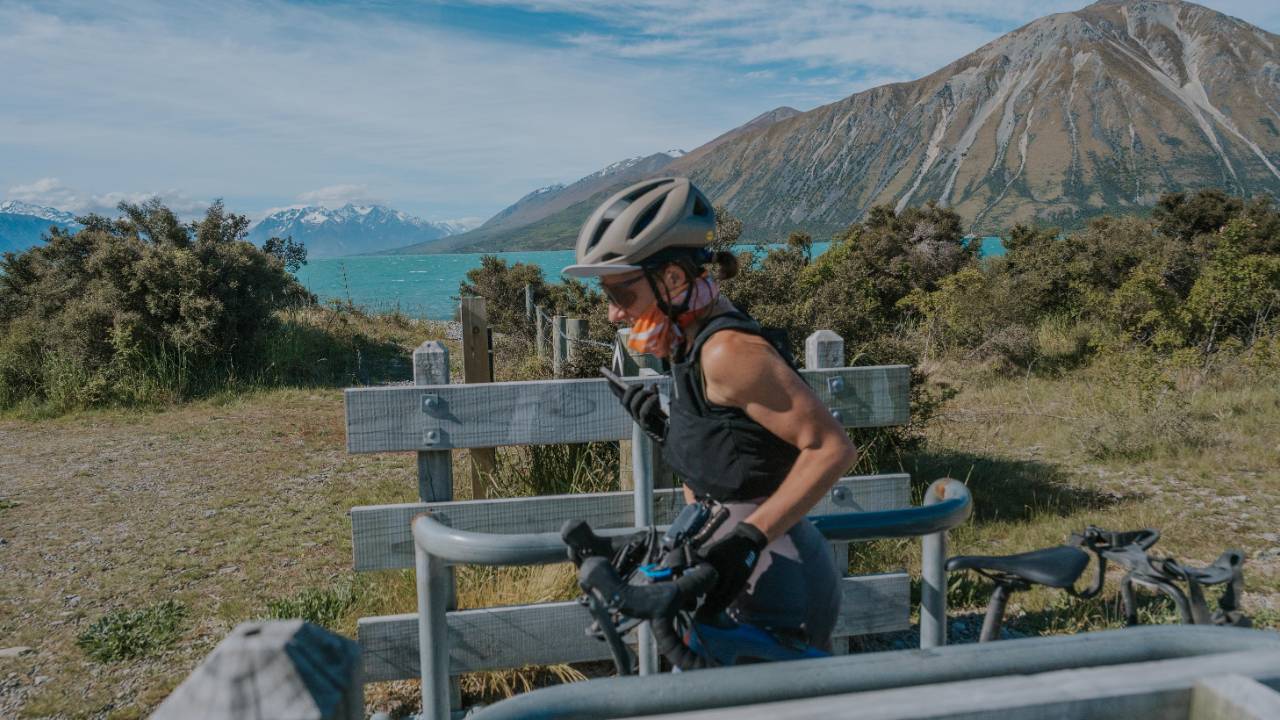
The formula that gets you here may not be the formula that carries you forward.
For much of my twenties and thirties, I lived by a particular formula: mind over matter, start before you feel ready, work harder than the obstacle, be willing to suffer for what matters.
It carried me through the 4 Deserts Grand Slam: four 250-kilometre self-supported races across some of the world’s most extreme deserts. It carried me 4,000 kilometres across India, day after day, through heat, exhaustion and the uncertainty of a journey too large to fully comprehend from the start. It got me through a non-stop Simpson Desert crossing and 50 self-supported days across the Himalayas.
Those experiences taught me that discomfort was survivable. That the body and mind often have more to give than we think. That you do not need to feel ready to begin; you need to be willing to take the next step, and then another.
I developed a significant capacity to suffer: to keep moving when things were hard, uncertain and uncomfortable.
For a long time, that was a superpower.
What the Mountains Also Taught Me
On expedition, though, I also understood the power of a pause.
You stopped to read the terrain, check your resources, adapt to conditions, refuel, wait out weather and make sure the next step was still the right one. You did not call that quitting. You called it good decision-making.
In the mountains, no one confused relentless forward motion with wisdom. Conditions changed. The body changed. The terrain changed. Good judgement meant responding to what was actually in front of you, rather than forcing the plan you had made when the conditions were different.
But somewhere along the way, I carried the capacity to suffer out of the mountains and into every part of my life: business, motherhood, training, relationships and public work.
I came to believe endurance was the answer everywhere.
If something was hard, I should absorb more. Give more. Push harder. Keep moving.
A capacity to suffer is valuable. It is not the same thing as having infinite capacity.
When a Formula Stops Working
The beliefs and formulas that build us are not permanent truths. They are tools for a season.
The difficulty comes when a formula that has genuinely served you starts to ask too much. When what once looked like determination begins to look more like depletion. When the capacity that helped you achieve remarkable things becomes the reason you are no longer listening to yourself.
This can be an uncomfortable reckoning, particularly for people whose identity has been built around being capable.
For the leader who has always been able to carry more. The founder who has always found another gear. The parent who holds things together. The athlete who knows how to endure. The person others turn to because they rarely appear to need anything.
What happens when the strategy that made you successful no longer works?
It is tempting to read that moment as weakness. To think the answer is to become tougher, more disciplined or more efficient. But sometimes the issue is not that we are failing the formula.
It is that the formula no longer fits the terrain.
Life Load Is Still Load
There is no clean divide between the demands we experience at work, at home and in our bodies.
Sleep disruption. Caregiving. Financial pressure. Relationship strain. Hormonal change. Grief. Illness. The invisible labour of organising a household. The pressure of leading a business or a team. Training itself.
We may try to hold these things in separate compartments. The body does not.
It responds to total load.
This is true in endurance, where every decision has a compounding effect. Under-fuel for long enough, ignore recovery for long enough, keep spending energy without replenishing it, and eventually the system has fewer options available.
It is also true in organisations and families. We cannot expect people to perform indefinitely at a high level while treating their capacity as an infinite resource.
The strongest person in the room is often not the person with the most to give. They may simply be the person who has become most practised at giving without asking what it costs.
The Evolution Is Not a Retreat
I do not believe the answer is to abandon ambition.
I still believe in courage. In beginning before you feel ready. In showing up when the work is hard. In the extraordinary possibility that can open when we stop waiting to feel certain.
But I have become more interested in the question of how we sustain that over time.
How do we build careers, relationships, organisations and bodies that are not only capable of a peak effort, but able to continue?
How do we remain ambitious without mistaking self-abandonment for commitment?
How do we make room for pauses without treating them as failure?
The answer is not always comfortable. It may mean changing the plan before a crisis forces it. Asking for help earlier. Naming the load honestly. Redistributing responsibility. Letting a season be different from the one before it.
It may mean accepting that adaptation is not the opposite of strength.
It is one of its highest forms.
What Sustainable Endurance Looks Like
Sustainable endurance is not a softer version of ambition. It is a more intelligent one.
It is knowing when to spend capacity and when to protect it. It is understanding that recovery is not a reward for output, but an input into the next stretch of meaningful work. It is refusing to confuse urgency with importance, or exhaustion with contribution.
It is building enough honesty into a team, a household or a relationship that people can say what they are carrying before it becomes a crisis.
It is creating conditions where no one person is expected to hold the entire system together.
And it is remembering that the goal is not simply to reach the next finish line.
The goal is to keep choosing challenges that matter, without losing the person who wanted them in the first place.
You can retain aspiration without relying on self-abandonment. You can change how you get there without giving up on where you are going.
The Question I Am Carrying Forward
I still value the younger version of myself who believed she could do hard things. She was right.
But I no longer think the answer to every hard thing is to endure more.
Sometimes the most courageous decision is to pause long enough to understand the conditions. To look after the system that is carrying you. To update the formula before it becomes a liability.
Not because you want less from life.
Because you want to be able to keep living it fully.
This is The Long Game. Start the conversation.