
Children need terrain.
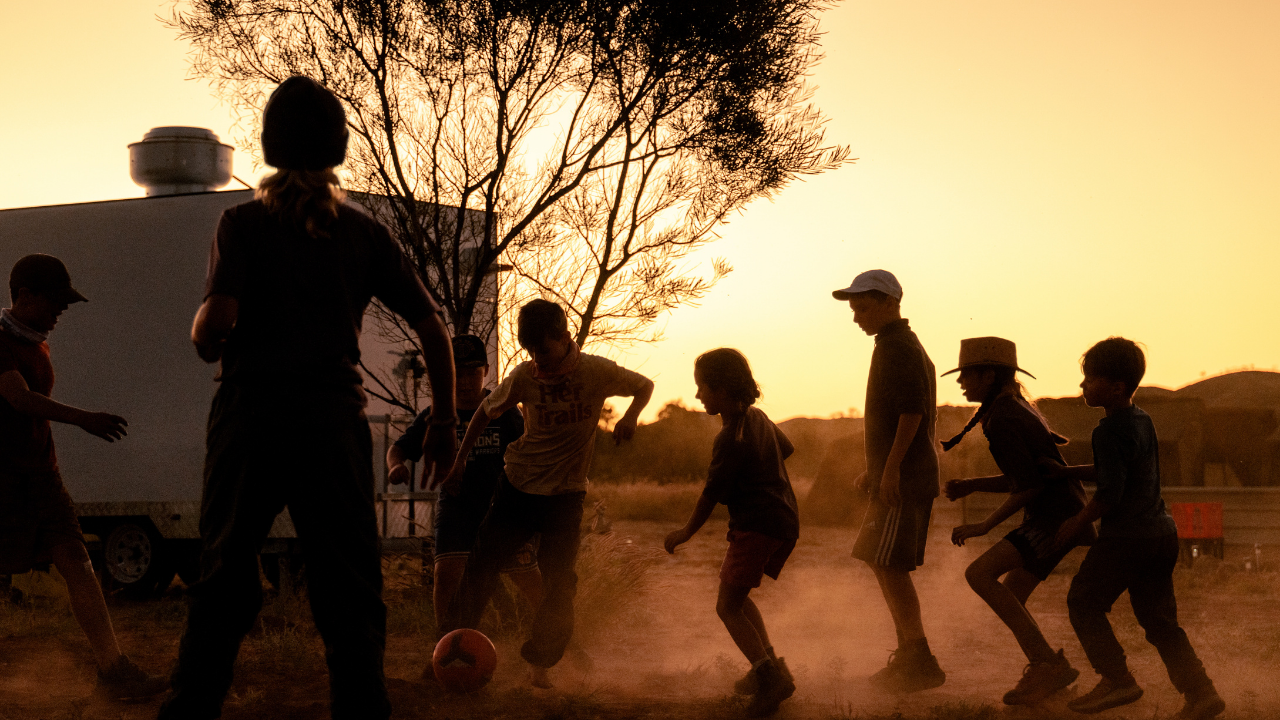
Enough structure to feel held. Enough freedom to become.
Smooth paths teach my children very little.
I have watched them build real capacity on uneven ground, in changing weather and through moments of manageable risk. Not because difficulty is inherently good, but because the right kind of difficulty gives them something comfort cannot.
It gives them evidence.
Evidence that they can assess what is in front of them. That they can steady themselves after losing balance. That uncertainty does not always mean danger. That asking for help and finding their own way can exist at the same time.
My philosophy for raising them keeps returning to one line:
Enough structure to feel held. Enough freedom to become.
Children do not become capable because every obstacle is removed before they reach it. Capability grows when they encounter something demanding, remain supported and discover that they can participate in what happens next.
My son put it more simply than I ever could:
“I like that you can explore lots of nature and that you can just be free.”
That is the whole argument, from someone who has never read a parenting book.
Difficulty Can Be a Nutrient
We often speak about difficulty as though it is something to eliminate. We smooth the path, shorten the wait, solve the problem and step in before frustration has had time to become learning.
Sometimes that intervention is necessary. Children need protection, guidance and dependable boundaries.
But difficulty is not always harm.
In the right conditions, it can be a nutrient. It can help a child practise judgement, patience, courage, recovery and self trust.
The goal is not to expose children to unnecessary risk. It is to distinguish between danger and discomfort, then resist treating every uncomfortable moment as an emergency.
Capability Does Not Look the Same in Every Child
One child may show capability by moving confidently towards the unknown.
Another may pause, observe and choose carefully.
Courage in one child may look like climbing higher. In another, it may look like saying they are scared and continuing anyway. Care, caution, curiosity and persistence are all forms of capability.
We miss this when we define resilience too narrowly.
Adaptation is not about forcing everyone into the same response. It is about helping people build a wider range of responses, then trust themselves to choose among them.
The Same Principle Applies at Work
Adults also need enough structure to feel held and enough freedom to become.
Teams do not become adaptable when every uncertainty is removed or every decision is made for them. They become adaptable when expectations are clear, support is available and people are trusted to exercise judgement.
Too little structure creates anxiety. Too much control removes ownership.
The work of leadership is not to create perfectly smooth conditions. It is to build an environment where people can encounter difficulty without being abandoned inside it.
That is where capability grows.
This is Brave Adaptation. Enquire about this keynote. Or start with the free resource: The Long Game Playbook.