
Endurance of Another Kind
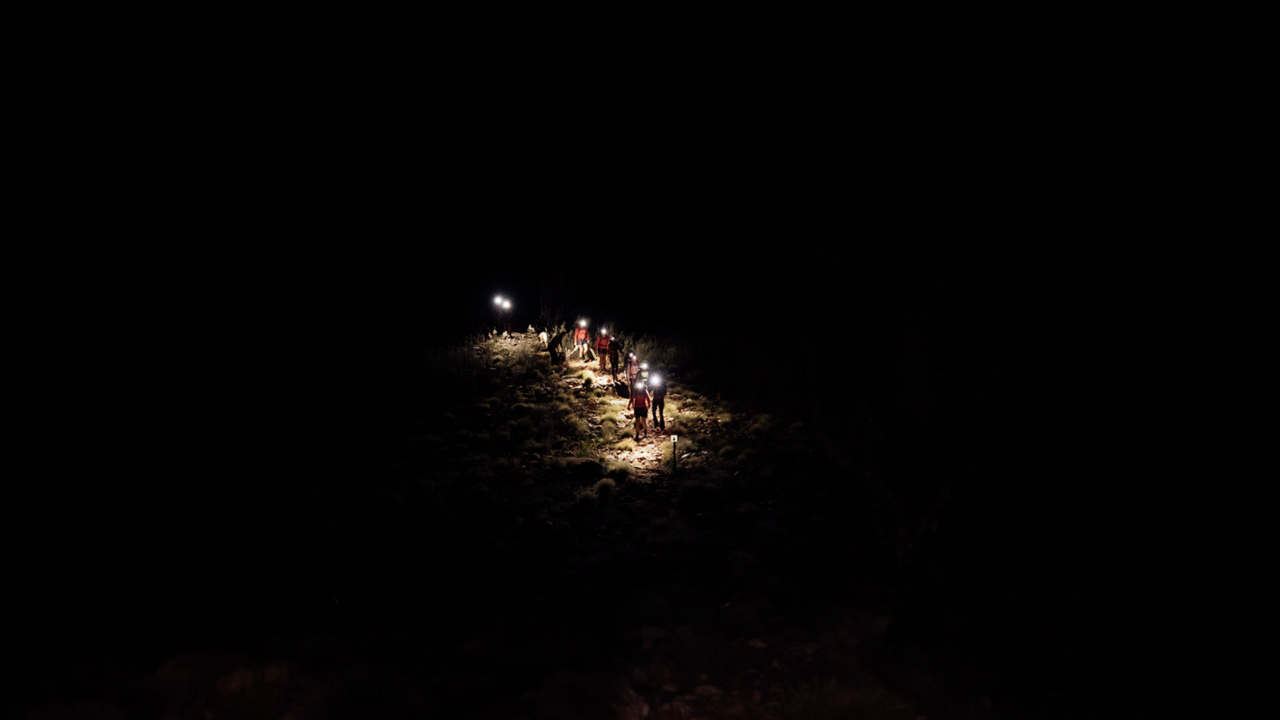
Some forms of endurance end at a finish line. Others ask us to keep going without one.
Deserts end.
The school run does not.
Neither, it turns out, does everything else.
I have spent much of my life preparing for challenges with a defined start, a mapped course and an eventual finish. Even the longest expedition has edges. There is a day you begin, a distance you must cover and a point at which the effort is complete.
Life rarely offers the same clarity.
Caregiving, work, parenting, health, grief, uncertainty and the long middle of a life do not arrive with aid stations or kilometre markers. They overlap. They change shape. They ask for effort while other parts of us are already tired.
My experience with IVF at 40 brought me into contact with a kind of endurance no training plan had prepared me for.
I knew how to tolerate discomfort. I knew how to delay gratification, follow a process and keep moving when the outcome was still far away.
But this was different.
Effort is not always the currency. Desire does not guarantee outcome.
This was not something I could muscle through, no matter how many deserts I had crossed.
When Effort Stops Being the Answer
Endurance culture often celebrates effort as though it can solve almost anything.
Keep going. Stay disciplined. Be more committed. Do the work others are unwilling to do.
There is truth in that. Consistent effort changes us. It expands capacity, develops skill and allows us to do things that once felt impossible.
But effort has limits.
Some outcomes remain outside our control. Some systems cannot be forced. Some seasons are not asking us to push harder, but to remain present inside uncertainty.
This can be difficult for high-performing people to accept. When effort has repeatedly produced results, the absence of a result can feel like a personal failure. We assume we have not worked hard enough, planned well enough or wanted it badly enough.
Sometimes that is not true. Sometimes the work is not to increase effort. It is to change our relationship with control.
The Endurance Without a Finish Line
There is a particular psychological challenge in carrying something that has no visible endpoint.
In an ultra-distance event, the difficulty is real, but the agreement is clear. You know what you have chosen. You understand the course. You can measure progress, even when it is slow.
The endurance of ordinary life is less contained. Parenting continues when sleep and capacity are already depleted. Caregiving has no predictable recovery block. Leadership pressure rarely pauses because life outside work has become difficult. Health uncertainty can remove the timeline entirely. Ambition can remain strong while the body, family or system asks for something different.
Without a finish line, people can begin to operate as though every day is the final push.
That is not sustainable endurance. It is repeated depletion.
Sustainable Performance Must Be Repeatable
Performance is often judged by what a person can produce once.
Can they meet the deadline? Deliver through the crisis? Carry the team? Push through one more difficult quarter?
Those moments matter, but they are an incomplete measure.
Sustainable performance is not defined by whether someone can survive an extraordinary demand. It is defined by whether the conditions allow strong performance to be repeated without steadily eroding the person producing it.
Performance is not built by asking people to give more. It is built by creating the conditions that allow them to keep going.
A result that cannot be repeated without harm is not a sustainable performance system.
Pace Is a Leadership Decision
Pace is often treated as a matter of personal discipline. People are told to manage their time better, become more resilient, establish boundaries or improve their recovery routines.
Those practices can help. But pace is not only an individual responsibility. It is also shaped by leadership decisions: how many priorities are declared urgent, whether deadlines reflect actual capacity, how often work is interrupted or redirected, whether high performers are repeatedly rewarded with more load, whether recovery is protected or left to chance, and whether people can name reduced capacity without being treated as less committed.
When an entire team is struggling to maintain the pace, it is unlikely to be a collection of individual time-management failures. It is a system signal.
Recovery Is Strategic
Recovery is often positioned as the reward that follows hard work. Finish the project. Complete the quarter. Get through the launch. Reach the break.
The problem is that the next demand frequently arrives before recovery does.
In sustainable systems, recovery is not something people earn after depletion. It is built into the way effort is planned.
I have run further in a week than many people run in a year. I have only been able to do that repeatedly by refusing to treat recovery as optional.
Recovery is not the opposite of discipline. It is part of discipline. It protects decision making, emotional regulation, physical capacity and the ability to remain connected to purpose when conditions become difficult.
Where the Metaphor Breaks
But life is not an ultramarathon. It is important to understand where the metaphor stops being useful.
In a race, persistence eventually brings you closer to the finish. In life, more effort does not always move the outcome.
In a race, discomfort is often chosen. In caregiving, illness, fertility treatment, grief or financial pressure, it may not be.
In a race, stopping can mean the event is over. In life, stopping one approach may be the beginning of a more sustainable one.
Not every season requires greater resilience. Some require support. Some require structural change. Some require grief. Some require the courage to release an outcome that effort cannot secure.
Life Beyond the Finish Line
Deserts taught me how to keep going.
Life has taught me that continuing is more complex than movement.
Sometimes endurance looks like persistence. Sometimes it looks like restraint. Sometimes it means adapting the plan, asking for help or acknowledging that effort cannot guarantee the outcome you want.
The long game is not about giving everything, every day. It is about understanding what the next season will require and refusing to spend the capacity needed to meet it.
Sustainable performance must be repeatable. Pace is a leadership decision. Recovery is strategic. And the pause is not where performance stops. It is where the next version of performance becomes possible.
This is The Long Game. Start with my free playbook.